ORIGINS
Porcelain owes its origin to the loved and trusted ceramic tiles. The earliest ceramic tiles were discovered in China and date back over two thousand years. In Europe, the oldest known ceramic tiles were found in Italy, dating to the 13th century.
PORCELAIN LARGE-SCALE TILES
Porcelain tiles are also made from a clay mix that is fired at high temperatures. Durable and beautiful, porcelain tiles got scaled up to large format about fifteen years ago. Modern large-format porcelain mimics natural stone, concrete, metal and even wood. Their consistent colours and patterns, combined with the lack of multiple seams, have made them a popular choice among designers.
It was only a matter of time before we tried to use large porelain tiles as kitchen worktops, to clad bathroom vanities, or even drawer fronts. This looks great for a while, but the fragile edges do not hold up over time.
PORCELAIN SLABS
Porcelain slabs are relatively new to the market of kitchen worktops. They offer numerous benefits compared to other materials:
PROS OF PORCELAIN KITCHEN WORKTOPS
1. EXCEPTIONAL DURABILITY
Porcelain is a very dense, low-porosity material, making it stain-resistant. Red wine, coffee, oils, spices and sauces do not penetrate, helping surfaces stay pristine. Everyday spills are no longer a concern.
Its exceptional hardness allows porcelain surfaces to resist scratches, chips, and general wear and tear. It is a popular choice for flooring, even outdoors. It easily withstands the demands of kitchen use.
Additionally, porcelain is resistant to UV light, so you won’t have to worry about the surface changing colour over time.
Because it is vitrified at extremely high temperatures, porcelain can handle hot pots and pans better than many engineered surfaces.
2. HYGIENE
Non-porous surfaces do not harbour bacteria or mould, supporting food-safe prep without periodic sealing.
3. LOW MAINTENANCE
Day-to-day care is simple—usually mild cleaners or a damp cloth—reducing lifetime upkeep compared to natural stones that need sealing.
3. MULTITUDE OF STYLES AND FINISHES
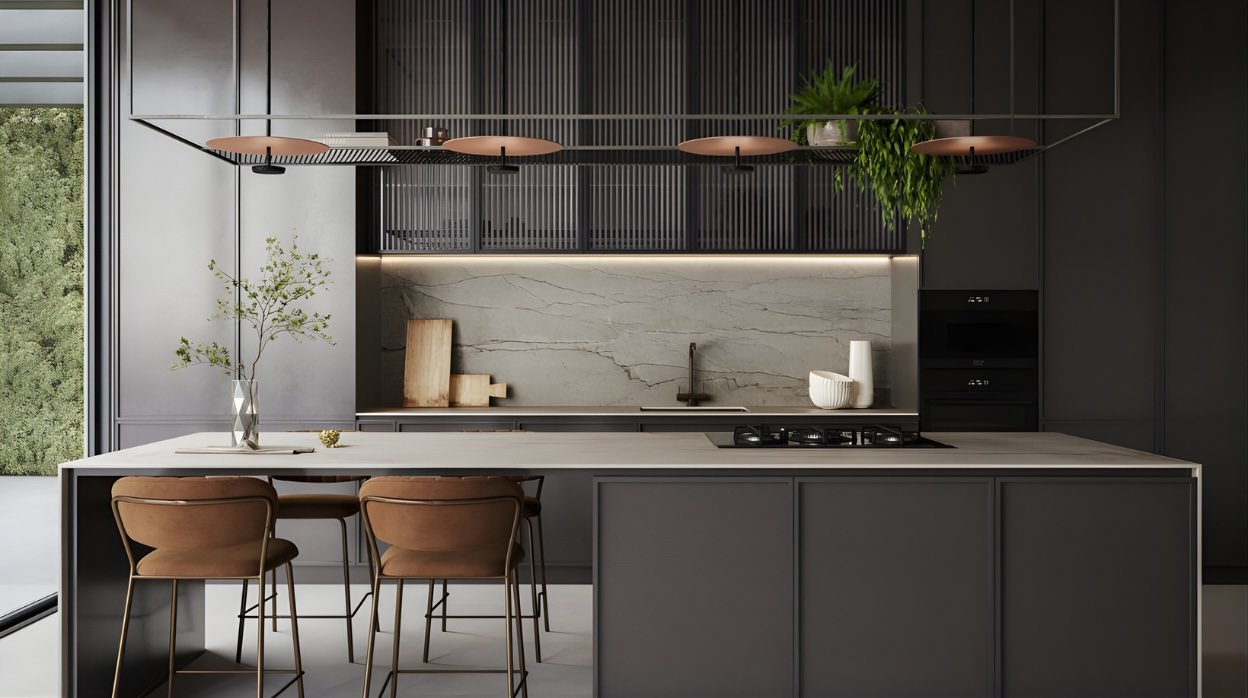
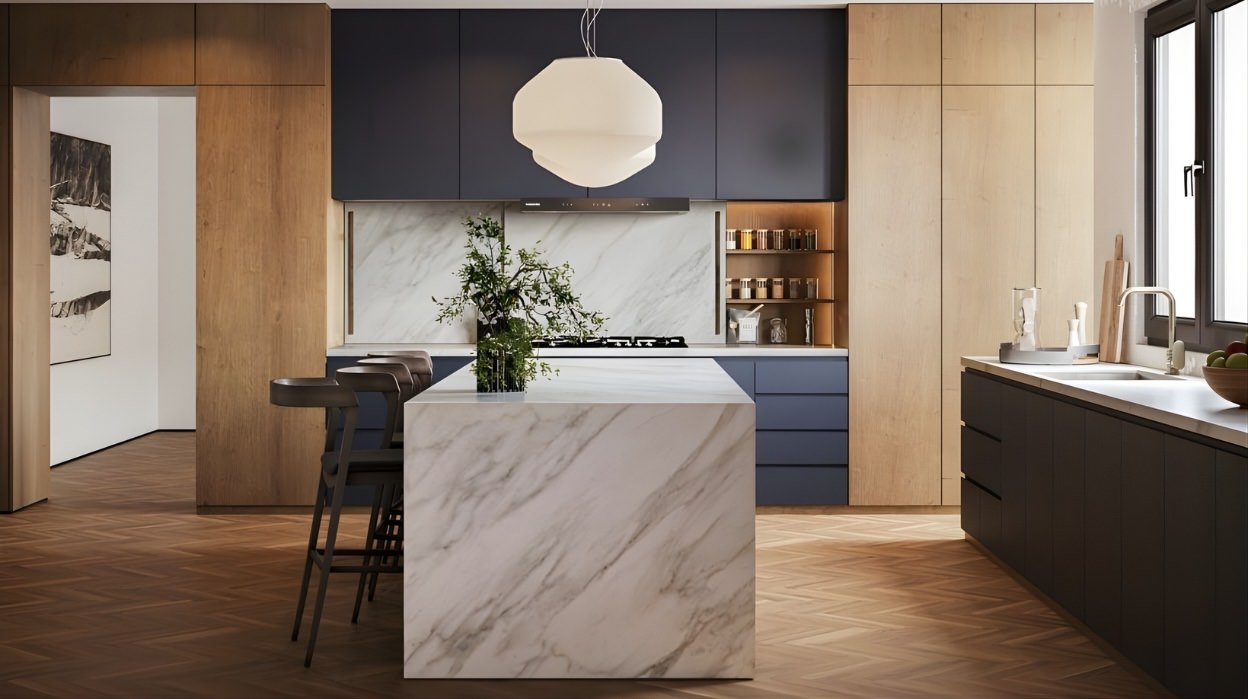
Large-format slabs enable sleek, minimal joints for a seamless, contemporary aesthetic across worktops, splashbacks, and upstands.
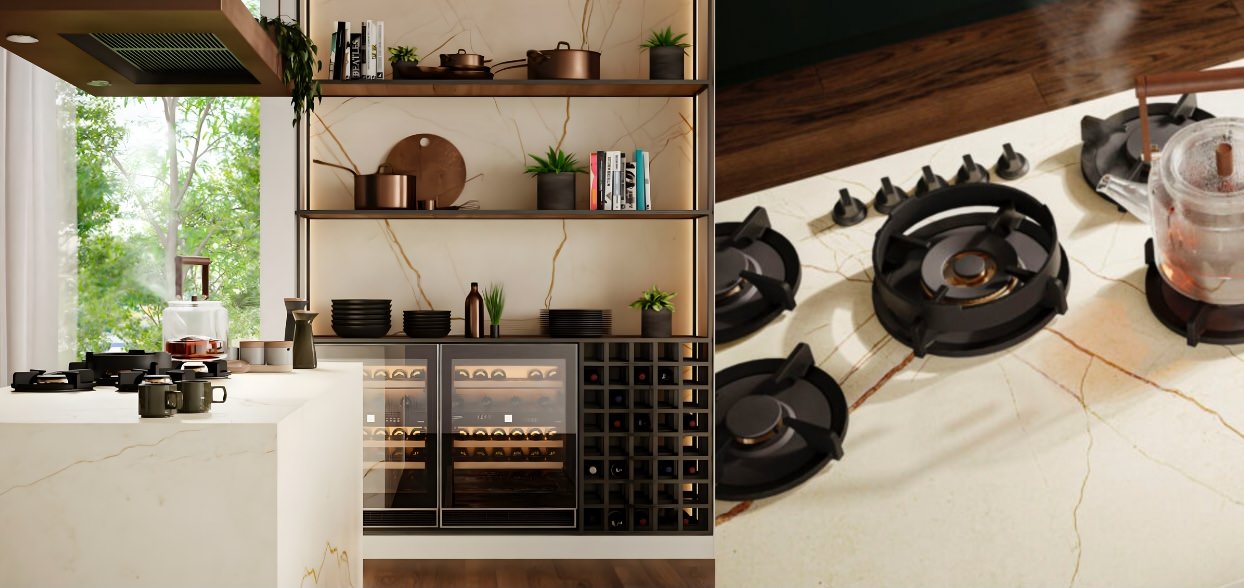
A wide range of colours, finishes, and realistic stone/metal/wood looks created by advanced printing and texturing technologies open up a world of creative possibilities.
4. SUSTAINABILITY
CONS OF USING PORCELAIN SLABS AS KITCHEN WORKTOPS
1. EXTREMLEY HEAVY
Porcelain tiles and worktops are very heavy due to their density. When specifying these materials, it’s important to consider the type of construction involved. Kitchen joiners should be aware during the design stage that special reinforcement may be necessary to support porcelain worktops.
2. COMPLEX INSTALLATION
Conventional stone-cutting tools cannot cut porcelain; specialized equipment is required, which adds to labor time, waste, and contingency for potential breakage.
2. BRITTLE AT THE EDGES
Although porcelain is hard and scratch-resistant, its thin, rigid structure can chip or crack easily from heavy impacts, particularly at corners and edges.
3. IMPOSSIBLE TO REPAIR
Repairing damage can be challenging; significant chips or cracks may require the entire slab or a large section to be replaced.
4. LIMITED EDGE PROFILES
Limited edge profiles. The density, brittleness and superficial pattern / colour of porcelain restrict the design of decorative edges, leading most projects to use square, pencil, or small bevels instead of more ornate options.
Only recently Sapienstone launched their “4D” range where the pattern is printed all the way through the depth of the slab, thus opening up a wider range of options.
Personally, I find porcelain slabs cold and “dead”, especially when compared to natural stone. While the “porcelain wood” look is an interesting concept, it seems oxymoronic. I would only consider using it in situations where real timber cannot be used, but a timber-like appearance is crucial to the design.
The only porcelain styles I truly appreciate are the original ones that don’t attempt to imitate existing surfaces. Instead, they offer a new and expressive possibility.
If you are looking for more ideas, follow me:
Get in touch if you have any questions or would like assistance with your bespoke kitchen:
PS: Most of the images in this post are from Pinterest and Google